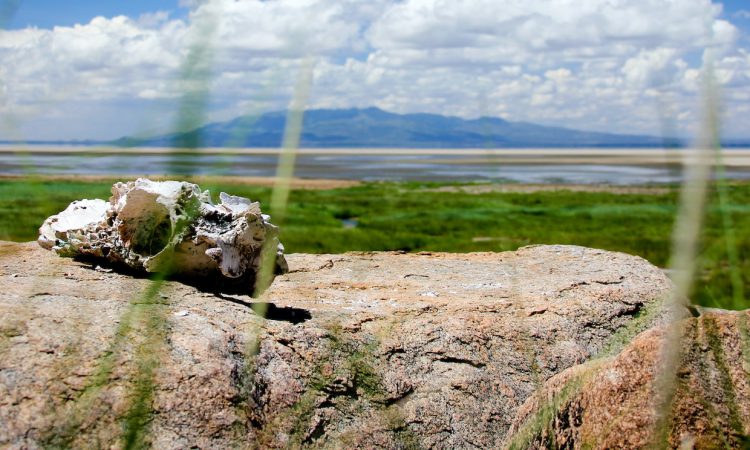
Lake Natron is a very unusual lake with orange-red water that looks fiery and glossy. But despite how it looks, it is very dangerous.
The lake is in the Gregory Rift, part of the Great East African Rift Valley, in a dry area of northern Tanzania near the Kenyan border.
We offer helicopter safaris to Lake Natron for those who want to see it from above.
Interesting Facts About Lake Natron
- The lake is named after a natural compound called natron (hydrated sodium carbonate), which is found in large amounts here.
- It is very shallow, with a depth of only 3 meters.
- The lake is about 57 kilometers long and 22 kilometers wide, though the width changes depending on water levels.
- It is highly salty and alkaline, with a pH of around 10.5 or more.
- These conditions are caused by minerals like trona and sodium, which stay behind as the lake’s fresh water evaporates (the lake has no outlet).
- It sits at the foot of Ol Doinyo Lengai, a volcano whose minerals flow into the lake, increasing its salt content.
- The lake is mainly fed by the Ewaso Ng’iro River and some seasonal streams.
- The area receives little rainfall, and the intense heat causes high evaporation, concentrating the minerals even more.
- The harsh environment makes it impossible for most animals to survive, except for halophilic organisms like cyanobacteria that feed on salt.
- The lake’s red and orange color comes from the pigments of these cyanobacteria and algae.
- Flamingos thrive here because they feed on the algae and cyanobacteria, and the lake keeps predators away.
- The high salt content can calcify birds that land in the lake and are unable to escape.
- Some invertebrates and a unique species of fish can survive in less salty parts of the lake.
- There are hot springs along the eastern shores, and the lake water can reach up to 140 °F (40–60 °C).